Physical Address
304 North Cardinal St.
Dorchester Center, MA 02124
Physical Address
304 North Cardinal St.
Dorchester Center, MA 02124

By Dr. Asmat Ullah Khan | DVM Last Reviewed: December 4, 2025
MEDICAL DISCLAIMER: This content is for informational purposes only and is not a substitute for professional veterinary advice, diagnosis, or treatment. Always seek the advice of your veterinarian with any questions you may have regarding a medical condition. Never disregard professional veterinary advice or delay in seeking it because of something you have read on this website.
I remember Asho, a middle-aged Labrador who came to my clinic with a frustrating cycle of recurring skin and ear infections. His owner, desperate to boost dog immunity, had tried every “immune-boosting” supplement on the market. Yet, Asho was still sick every few weeks.
Asho’s case is a perfect example of the most common mistake pet owners make: trying to “add” immunity with pills while ignoring the underlying issues that are suppressing it.
Asho was slightly overweight, chronically stressed from long hours alone, and eating a highly processed diet. His immune system wasn’t weak; it was overwhelmed. The solution wasn’t a magic pill. It was a return to the biological basics.
Here are the 10 proven, science-backed strategies I use in my practice to help dogs like Asho build real, lasting resilience.

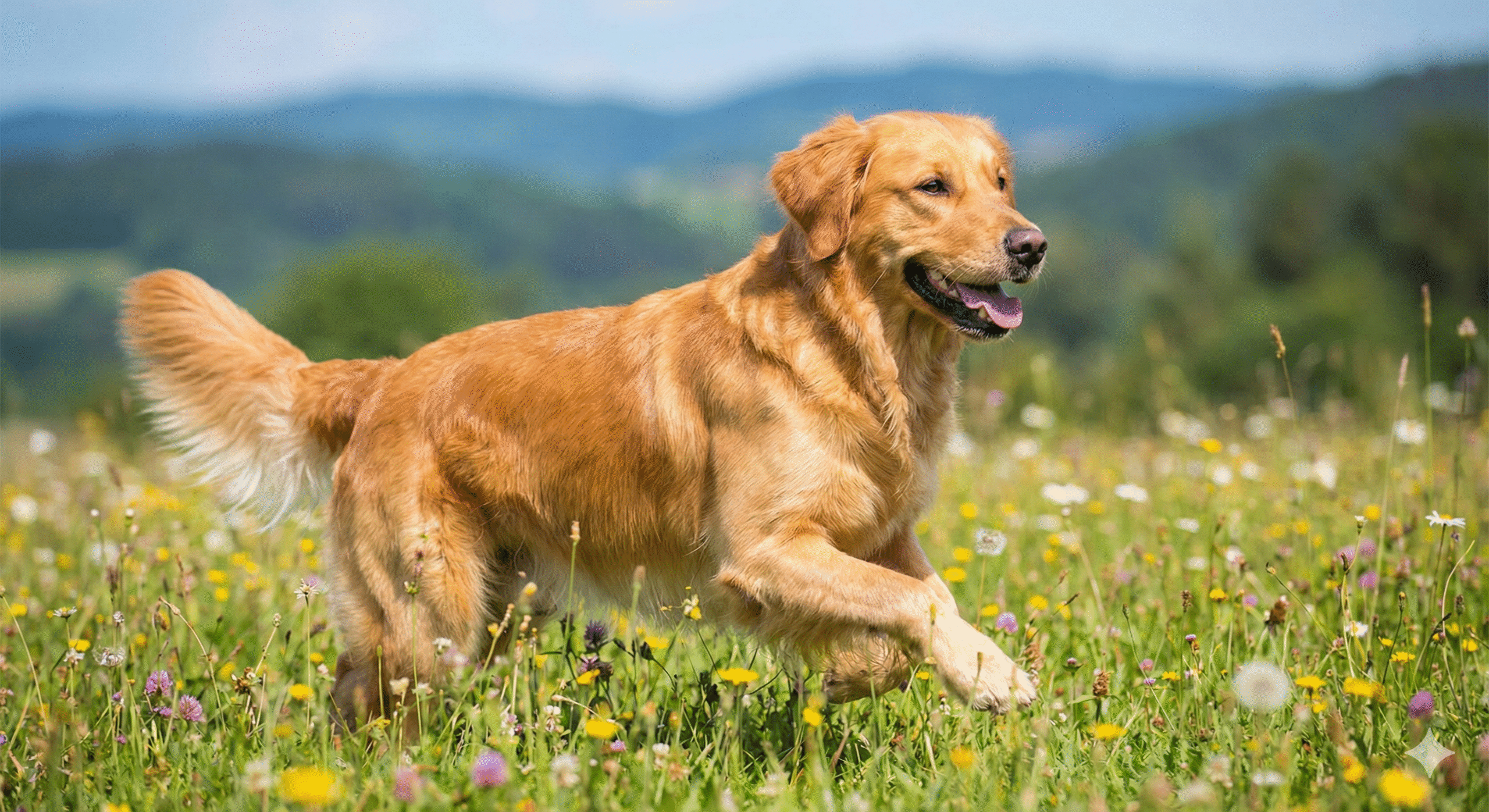
A healthy Labrador showing the results of efforts to boost dog immunity naturally.
Think of your dog’s immune system not as a muscle to be pumped up, but as a highly sophisticated army. You don’t want it to be hyper-aggressive; that leads to allergies and autoimmune disease. You want it to be balanced, efficient, and ready to respond.
The goal is immunomodulation—helping the system regulate itself. Over-supplementing an already balanced dog can create new problems, like vitamin toxicities that impair barrier functions. The key is to remove the suppressors and provide the right building blocks.
This was the turning point for Asho. Obesity is not just a cosmetic issue. As noted in the Textbook of Veterinary Internal Medicine, adipose (fat) tissue is biologically active and constantly pumps out pro-inflammatory cytokines. Research confirms that this chronic, low-grade inflammation keeps the immune system in a state of constant alarm, effectively distracting it from fighting real pathogens
This chronic, low-grade inflammation keeps the immune system in a state of constant, low-level alarm, making it less effective when a real threat arrives. Achieving a lean body weight is the single most powerful step you can take to boost dog immunity. In my practice, I’ve seen countless chronic skin and joint cases improve simply by getting the dog to an ideal weight.
It is widely documented that approximately 70% of a dog’s immune system resides in the gut. The trillions of bacteria living there constantly communicate with immune cells. A 2021 study in Frontiers in Veterinary Science highlights how specific dietary fibers can enhance this barrier, preventing pathogens from ‘leaking’ into the bloodstream.
A diet rich in fermentable fibers (prebiotics) feeds these beneficial bacteria. These good bugs then produce short-chain fatty acids that strengthen the gut lining, preventing pathogens from “leaking” into the bloodstream.
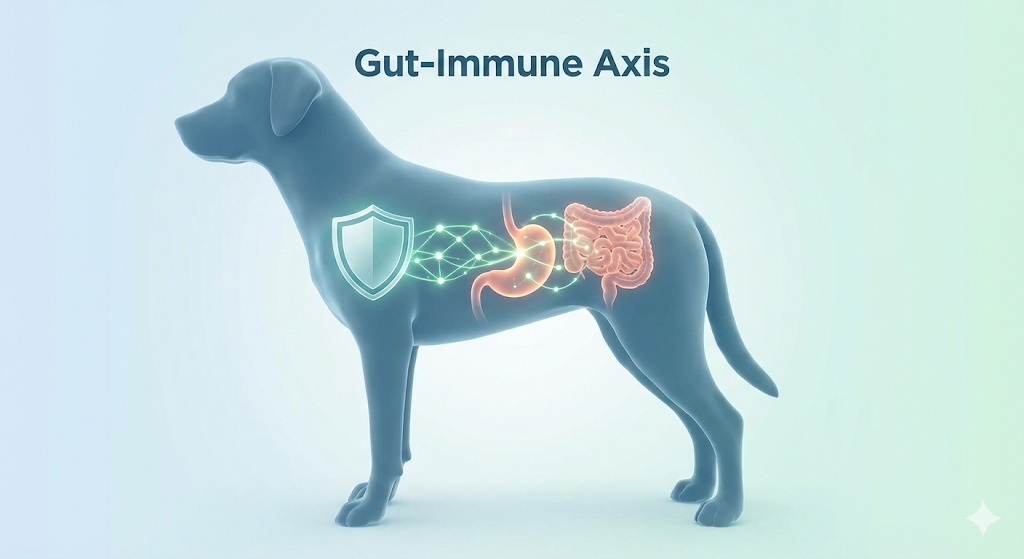
Diagram showing how gut health helps boost dog immunity.
Avoid frequent, drastic diet changes, which can disrupt this delicate ecosystem. For dogs with sensitive stomachs, a prescription gastrointestinal or derm diet with specific fiber blends can be a game-changer for their canine microbiome and overall health.
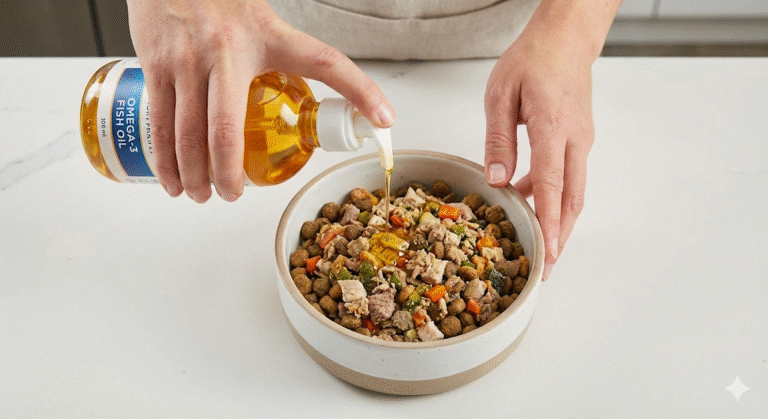
Omega-3 fatty acids (EPA and DHA) do more than shine the coat. Clinical reviews indicate that these fatty acids become incorporated into cell membranes and help blunt the production of inflammatory mediators (eicosanoids). This prevents the immune system from overreacting to minor triggers.
Dr. Khan’s Tip: For dogs with chronic inflammatory conditions like Asho, I often recommend timing the Omega-3 rich meal in the evening. Many inflammatory mediators peak overnight, and having these fatty acids on board can help counteract that natural cycle.
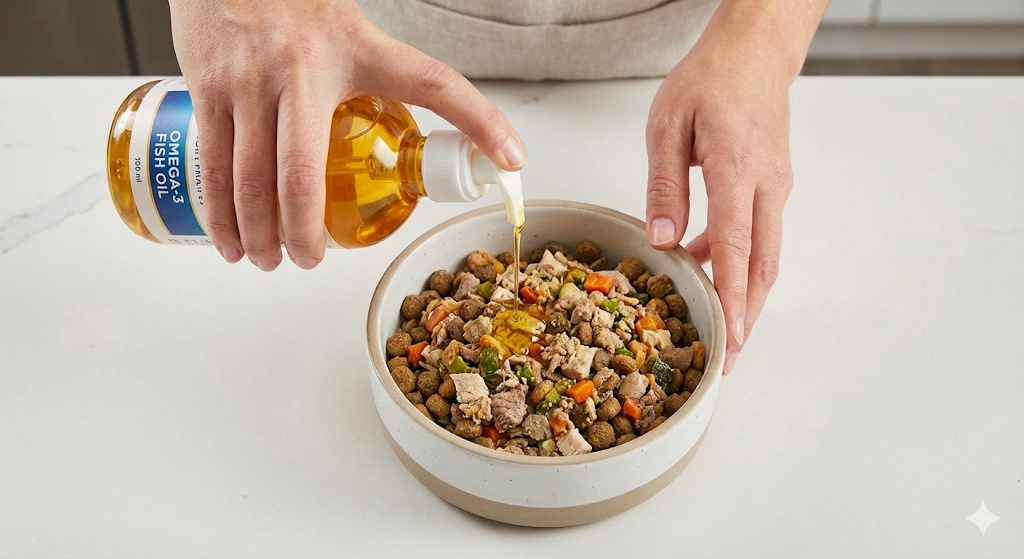
Alt Text: Adding Omega-3s to food is a proven way to boost dog immunity.
Chronic stress is a direct immune suppressor. Studies on canine welfare show that elevated cortisol levels can inhibit lymphocyte function. For Asho, reducing social isolation was just as medically relevant as his diet change.
For Asho, being left alone for 10 hours a day was a major stressor. We worked on a plan that included a mid-day dog walker and interactive toys. Reducing his stress load was as important as changing his diet.
The lymphatic system, which transports immune cells throughout the body, doesn’t have a pump like the heart. It relies on muscle movement to circulate. Regular, moderate exercise is essential for keeping this system flowing.
However, the type of exercise matters. For a stressed dog, high-intensity fetch can sometimes add to the adrenaline load. We switched Asho to slower, “decompression walks” where he was allowed to sniff freely.

Alt Text: Low-stress activities like sniffing help boost dog immunity by lowering cortisol.
This “nose work” is mentally tiring but calming, helping to lower stress hormones and support healthy lymphocyte function.
The first line of defense against pathogens is the mucus found in the nose, mouth, and gut. This sticky substance traps invaders before they can enter the body.
Dehydration dries out these mucosal barriers, creating cracks in the armor. Ensure your dog has constant access to fresh, clean water to keep these defenses functioning optimally.
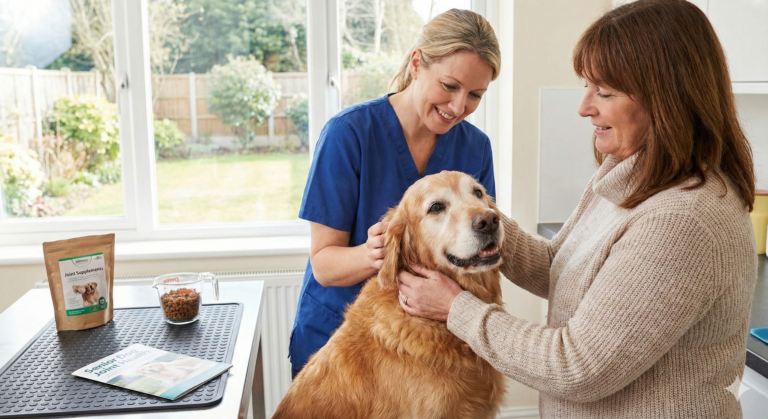
Once the basics are addressed, targeted supplements can help seniors. For example, organic zinc has been shown to improve T-cell responses in aging dogs. Furthermore, emerging research suggests that chitosan oligosaccharides (COS) can significantly raise antibody levels after vaccination, offering a measurable boost for immunocompromised patients.
Always choose products with published data and consult your vet, as quality varies wildly.
Many owners turn to raw diets hoping for a “more natural” immune boost. While some dogs do well, it’s crucial to understand the risks. Raw meat can carry pathogens like Salmonella and E. coli.
For an immunocompromised dog, or a household with young children or seniors, this risk may outweigh the potential benefits. A high-quality, cooked, balanced immunomodulatory diet is often a safer choice.
Some well-meaning owners skip vaccines, fearing they “overload” the immune system. In reality, core vaccines act as a safe “boot camp,” training the immune system to recognize and destroy deadly viruses like parvovirus and distemper.
Skipping them doesn’t “save” immunity; it leaves your dog vulnerable to diseases that can devastate their immune system far more than a vaccine ever could.
Fleas, ticks, and intestinal worms are a constant drain on a dog’s resources. The immune system has to expend precious energy fighting these low-level chronic infections.
By keeping your dog parasite-free year-round, you free up that energy to be used for fighting off more serious viruses and bacteria. It’s a simple, fundamental way to boost dog immunity.
To help you navigate the noisy world of pet health, here is a comparison of common strategies.
| Strategy | The Hype | The Clinical Reality | Impact Score |
| Weight Management | “It’s just for looks.” | Critical. Fat tissue creates chronic inflammation that suppresses immunity. | ⭐⭐⭐⭐⭐ (High) |
| Stress Reduction | “Dogs don’t get stressed.” | Vital. Chronic cortisol directly kills immune cells. Routine & enrichment are key. | ⭐⭐⭐⭐⭐ (High) |
| Gut Health (Fiber/Probiotics) | “Just give some yogurt.” | Essential. 70% of immunity is in the gut. Requires specific prebiotic fibers, not just random dairy. | ⭐⭐⭐⭐ (High) |
| Omega-3 Fatty Acids | “Makes their coat shiny.” | Proven. Potent anti-inflammatory that blunts immune overreaction. | ⭐⭐⭐⭐ (High) |
| Random “Immune” Multivitamins | “More is better!” | Low/Risky. Indiscriminate use can lead to imbalances or toxicity. | ⭐ (Low) |

The hierarchy of needs required to boost dog immunity effectively.
Over six months, Asho’s life changed. We slowly got his weight down, switched him to a high-fiber, Omega-3 rich diet, and his owner committed to daily decompression walks.
The infections didn’t just stop; Asho’s entire demeanor changed. His coat shined, his energy returned, and he finally looked like a healthy Labrador.
His transformation wasn’t from a miracle product. It was from building a solid foundation of health. That is the only true way to boost dog immunity.
Q: What is the single best thing to give a dog for their immune system? A: There is no single “best” thing. The most powerful approach is a combination of a lean body weight, a balanced diet rich in fiber and Omega-3s, and a low-stress lifestyle. These foundational pillars are far more effective than any single supplement.
Q: How can I boost my dog’s immune system quickly? A: You cannot “quickly” boost the immune system. Building resilience takes time. The fastest way to see improvement is to address acute stressors, ensure they are well-hydrated, and provide a highly digestible, balanced diet. For long-term health, focus on weight management and gut health.
Q: Do probiotics really help a dog’s immune system? A: Yes, but the strain matters. The gut houses a large portion of the immune system. Specific probiotic strains, combined with prebiotic fibers, can help strengthen the gut barrier and improve the immune response. Consult your vet for a product with proven efficacy.
Q: Can over-exercising hurt my dog’s immunity? A: Yes. While moderate exercise is beneficial, intense, prolonged, or high-stress exercise can temporarily suppress the immune system, increasing susceptibility to illness. It’s important to balance activity with adequate rest and recovery.
Q: Are homemade diets better for immunity than kibble? A: Not necessarily. A homemade diet is only better if it is complete and balanced. An unbalanced homemade diet can lead to nutrient deficiencies that severely harm the immune system. If you choose to cook for your dog, you must follow a recipe from a board-certified veterinary nutritionist.