Physical Address
304 North Cardinal St.
Dorchester Center, MA 02124
Physical Address
304 North Cardinal St.
Dorchester Center, MA 02124

By Dr. Asmat Ullah Khan | DVM Last Reviewed: December 5, 2025
MEDICAL DISCLAIMER: The content provided in this article is for informational purposes only and does not constitute medical advice. Always consult your veterinarian for specific health care protocols tailored to your dog’s individual needs.
In my years of practice, two patients stand out as the perfect case study for aging joints. First, there was Janga, a 7-year-old Labrador. She came into my clinic showing just a hint of stiffness after long hikes. Her owner didn’t panic; instead, she committed to a proactive protocol: strict weight control, “joint-friendly” consistency, and home modifications. Today, at 11 years old, Janga still navigates moderate trails with enthusiasm, and her radiographs show only mild, manageable changes.
In stark contrast, I treated another Lab of the same age, let’s call him “Rocky.” Rocky was a classic “weekend warrior.” He spent Monday through Friday sleeping on the couch, only to be taken out for intense, high-impact ball chasing on Saturdays. His owner thought this rest-then-sprint pattern was healthy. Unfortunately, that stop-start cycle on unconditioned muscles accelerated his cartilage wear. By the time Rocky saw me at age 10, preventing arthritis in older dogs was no longer the goal; we were in a battle to manage severe, debilitating pain.
While we cannot stop the clock, the difference between Janga and Rocky proves that we can modify the curve. Preventing arthritis in older dogs, or at least delaying its onset and severity—is an active, daily process.
Here are 12 expert tips, backed by veterinary science and clinical experience, to keep your senior dog moving comfortably.
Before diving into the tips, it is crucial to correct a common misconception. Many owners believe osteoarthritis (OA) is simply “wear and tear,” like tires wearing down on a car. However, modern veterinary research reveals it is much more complex.
OA is an active, inflammatory disease. It involves the breakdown of cartilage, changes to the underlying bone, and inflammation of the joint capsule. Therefore, preventing arthritis in older dogs requires a multimodal approach that addresses mechanical stress, inflammation, and pain signals simultaneously.
The single most powerful tool for preventing arthritis in older dogs is weight management. But this isn’t just about physics; it’s about chemistry.
Adipose tissue (fat) is biologically active. It secretes inflammatory hormones called adipokines, which circulate through the body and actively attack cartilage. A study on obesity and osteoarthritis highlights that overweight dogs have systemic inflammation that worsens joint health.
The Clinical Goal: You should be able to feel your dog’s ribs easily with a light touch, like running your fingers over the back of your hand. If their sides feel like your palm, they are overweight. Maintaining a Body Condition Score (BCS) of 4-5/9 is critical. By keeping your dog lean, you reduce both the mechanical load and the chemical attack on their joints.
As dogs age, their metabolic rate slows. The cup of food that kept them lean at age four will cause weight gain at age nine. To succeed in preventing arthritis in older dogs, use a kitchen scale to weigh food rather than a measuring cup. This precision prevents “calorie creep” and ensures they get exactly what they need to maintain muscle without adding fat.
Consistently preventing arthritis in older dogs requires understanding cartilage nutrition. Cartilage has no blood supply; it gets nutrients from the synovial fluid inside the joint. This fluid is pumped into the cartilage only through movement, specifically, the compression and release of walking.
However, the type of movement matters. High-impact, explosive activities (like sprinting after a ball or jumping for a Frisbee) create “shear forces” that can damage aging cartilage. Instead, aim for controlled, low-impact exercise. A study in BMC Musculoskeletal Disorders supports the concept that moderate, regular activity maintains muscle mass and joint function better than intermittent high-intensity exercise.
This is a nuance I share with all my senior dog clients. Cold muscles and stiff joints are prone to injury. Before starting your walk, spend 3–5 minutes doing a warm-up.
I recommend “Figure-8s.” Have your dog walk slowly in a figure-8 pattern through your legs or around two trees. This engages the spine, hips, and stifles in a controlled range of motion, lubricating the joints before the real work begins. It is a simple, zero-cost tactic for preventing arthritis in older dogs from flaring up post-exercise.
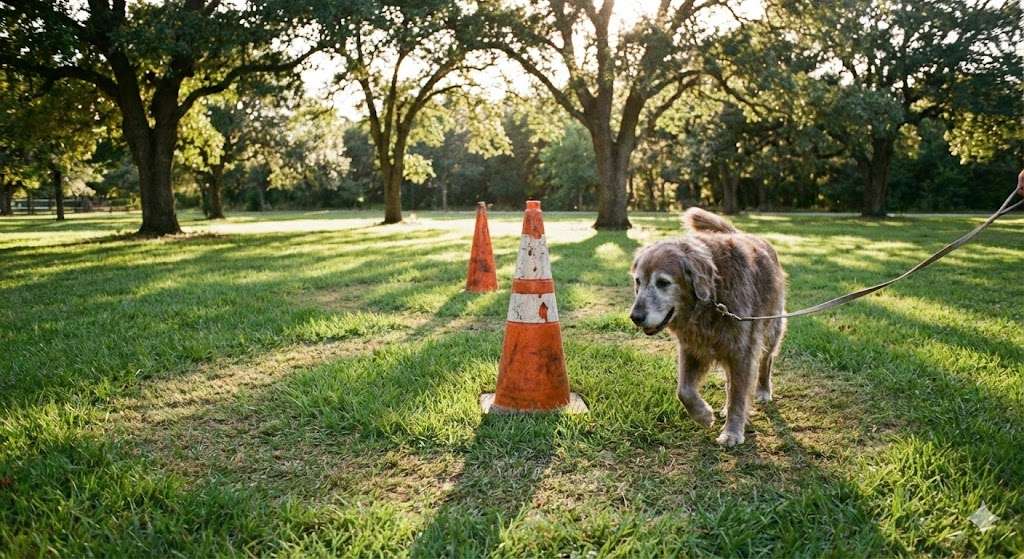
Warm-up exercises like Figure-8s for preventing arthritis in older dogs
If available, swimming or the underwater treadmill is the holy grail of senior exercise. The water provides buoyancy, removing the weight from the joints while the resistance builds muscle. Strong muscles act as shock absorbers. If the muscles are weak, the impact of every step goes directly into the bone and cartilage.
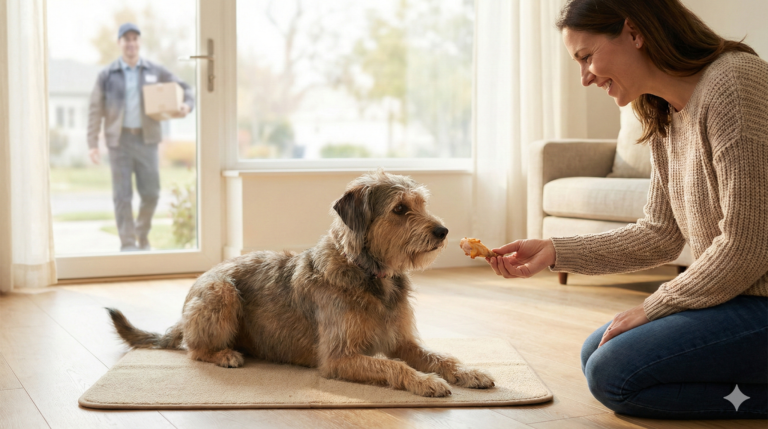
One of the most overlooked factors in preventing arthritis in older dogs is your flooring. Hardwood, laminate, and tile are slippery. Even if your dog doesn’t fall, they are constantly engaging their adductor muscles to keep their legs from sliding out—like walking on ice all day.
This causes “micro-trauma” and abnormal torque on the joints. The solution is the “No-Slip Protocol.” Place yoga mats or non-slip runners along the main highways of your home (e.g., from the bed to the water bowl, and from the sofa to the back door). This simple modification allows your dog to walk with a normal gait, reducing strain on hips and knees.
![Home modifications like non-slip runners for preventing arthritis in older dogs.]](https://pawlitic.com/wp-content/uploads/2025/12/image-6.png)
Home modifications like non-slip runners for preventing arthritis in older dogs.
Long nails are a biomechanical disaster. When a dog’s nails hit the floor, the neurological feedback tells the dog to shift their weight backward onto their heels. This changes the angle of the leg bones and increases stress on the joints.
Keep nails short enough that they do not touch the ground when the dog is standing. If you hear “click-click-click” on the floor, they are too long. Regular trimming is a mandatory part of preventing arthritis in older dogs.
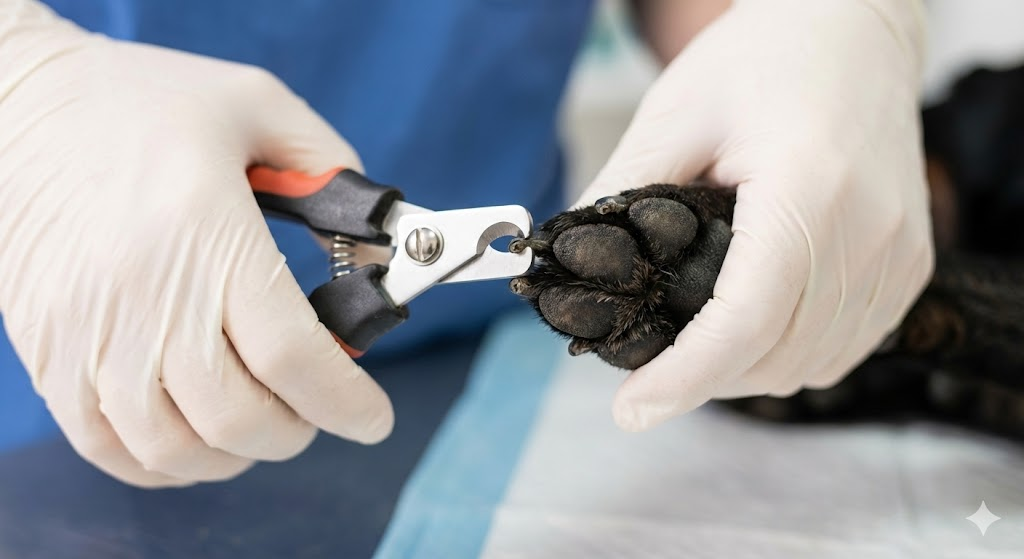
| Alt Text: Veterinary nail trim to improve traction for preventing arthritis in older dogs.]
Jumping out of a car or off a high bed generates massive concussive forces, especially on the front legs (shoulders and elbows). Repeated impact leads to cartilage micro-fractures.
Train your dog to use a ramp or pet stairs early. Do not wait until they are in pain to introduce this; by then, they may be too fearful to learn. Normalizing ramp use is a proactive investment in preventing arthritis in older dogs.
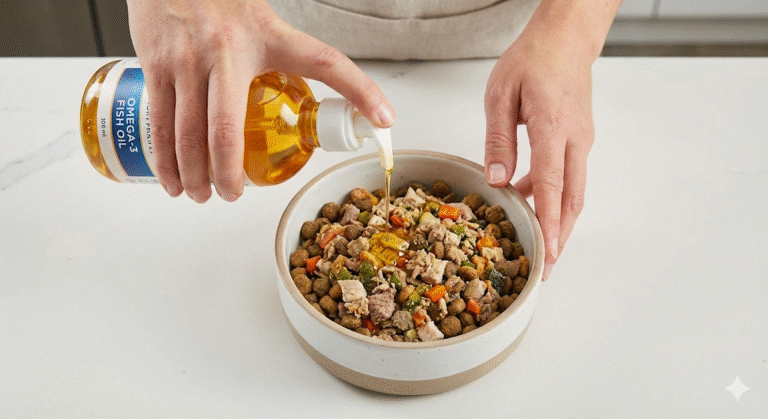
The supplement aisle is confusing. Glucosamine and Chondroitin are popular, but the scientific evidence for their ability to prevent arthritis is mixed. However, Omega-3 fatty acids (specifically EPA and DHA from marine sources) have robust backing.
According to research on nutritional management of OA, Omega-3s work by disrupting the inflammatory pathway (arachidonic acid cycle) within the joint. We generally aim for a therapeutic dose (often 50–100 mg/kg of EPA), which is significantly higher than what is found in most over-the-counter “joint treats.”
![Senior Labrador on a trail demonstrating success in preventing arthritis in older dogs.]](https://pawlitic.com/wp-content/uploads/2025/12/image-8.png)
Senior Labrador on a trail demonstrating success in preventing arthritis in older dogs.]
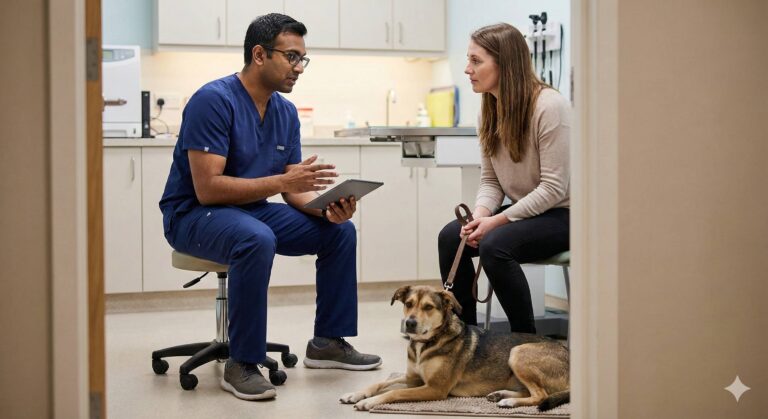
Most owners wait for a limp to visit the vet. However, dogs are masters of disguise. By the time they limp, the pain is already significant.
I recommend screening radiographs for large breed dogs at age 5-7, even if they seem fine. Seeing the early stages of hip dysplasia or elbow changes allows us to start aggressive management (rehab, diet, injections) immediately. Early detection is the cornerstone of preventing arthritis in older dogs from becoming a quality-of-life crisis.
There is a dangerous myth that giving pain medication “masks” the injury and causes dogs to overdo it. The opposite is true. Untreated pain causes “central sensitization” or “wind-up,” where the nervous system becomes hypersensitive.
Furthermore, if a joint hurts, the dog stops using it. This leads to muscle atrophy. Once the muscle is gone, the joint becomes unstable, and the arthritis progresses faster. Judicious use of NSAIDs or newer monoclonal antibody therapies (like bedinvetmab) under veterinary supervision keeps the dog moving, which keeps the muscles strong.
Cold, damp weather can stiffen arthritic joints. While this doesn’t cause arthritis, it exacerbates the clinical signs. Using heated beds or dog coats during winter walks helps maintain muscle temperature and blood flow. This is a simple lifestyle adjustment that aids in preventing arthritis in older dogs from limiting your pet’s activity levels.
![Joint anatomy comparison relevant to preventing arthritis in older dogs.]](https://pawlitic.com/wp-content/uploads/2025/12/image-9.png)
Joint anatomy comparison relevant to preventing arthritis in older dogs.]
To visualize the impact of these choices, I have compiled a comparison table based on the “Janga Method” versus the common mistakes I see in practice.
| Factor | Joint-Safe Approach (The Janga Method) | High-Risk Approach (The Weekend Warrior) | Clinical Impact |
| Activity | Consistent, daily low-impact walks & swimming. | Sedentary weekdays, intense fetching on weekends. | “Weekend Warrior” pattern increases shear stress and injury risk. |
| Flooring | Non-slip runners on all main paths. | Slick tile or hardwood throughout the home. | Slippery floors cause micro-trauma and adductor strain. |
| Weight | Lean (Ribs easily felt, BCS 4-5/9). | Overweight (Ribs hard to feel, BCS 6-7/9). | Fat tissue releases inflammatory cytokines (adipokines). |
| Car Access | Uses a ramp to enter/exit vehicles. | Jumps in and out of SUVs/trucks. | Jumping causes massive concussion on forelimbs. |
| Nails | Trimmed weekly; no clicking on floor. | Overgrown nails affecting foot posture. | Long nails force weight onto heels, altering biomechanics. |
| Diet | Measured meals; high EPA/DHA supplements. | Free-feeding; relies on unverified treats. | Omega-3s reduce inflammation; obesity accelerates OA. |
Janga’s legacy wasn’t built on a miracle drug. It was built on the cumulative effect of small, smart choices. Her owner understood that preventing arthritis in older dogs is a lifestyle, not a one-time treatment.
By controlling weight, modifying your home to prevent slips, and prioritizing low-impact movement, you can change the trajectory of your dog’s aging process. You may not be able to stop time, but you can certainly ensure your dog enjoys their golden years on the trail, not on the sidelines.
Q: Can I prevent arthritis in my older dog completely?
A: No, you cannot fully prevent the natural aging process of joints. However, a multimodal management approach can significantly delay the onset and reduce the severity of symptoms. The goal is to slow progression and maintain quality of life.
Q: What is the best exercise for preventing arthritis in older dogs? A:
Low-impact, consistent exercise is best. Swimming and controlled leash walking on flat surfaces are ideal because they build muscle without placing excessive concussive force on the cartilage. Avoid repetitive high-impact activities like ball-chasing.
Q: Do joint supplements really work for preventing arthritis in older dogs?
A: Evidence is strongest for marine-derived Omega-3 fatty acids (fish oil high in EPA). While supplements like glucosamine are popular, their ability to prevent arthritis is less supported by rigorous studies compared to the anti-inflammatory properties of Omega-3s.
Q: At what age should I start thinking about preventing arthritis in older dogs?
A: It is best to start early. For large breeds, focus on joint health starting at age 5-7. However, keeping a dog lean from puppyhood is the most effective long-term prevention strategy to minimize load-bearing stress.
Q: How do I know if my dog is already in pain?
A: Dogs rarely cry out. Look for subtle signs: reluctance to jump into the car, sleeping more, “bunny hopping” on stairs, licking a specific joint, or irritability when touched. If you see these, schedule a vet visit immediately.